
Vending cups 150 ml and 180 ml — from the manufacturer
Paper cups made for vending machines: a dedicated 6 oz cup, sizes from 4 to 9 oz, case counts built for route economics, and your own print on the wall. Made on our own line in Turkey.
Vending cups are bought as uninterrupted service, not as tableware: the cup has to drop from the column every single time, hold its shape when the machine grips it, stack tightly enough that a route van carries a full day of refills, and cost the same next quarter as it does today. We build the cup around those four things, and we build it in our own plant — the line you are quoting is the line that runs your order.
Built for the column, not adapted to it
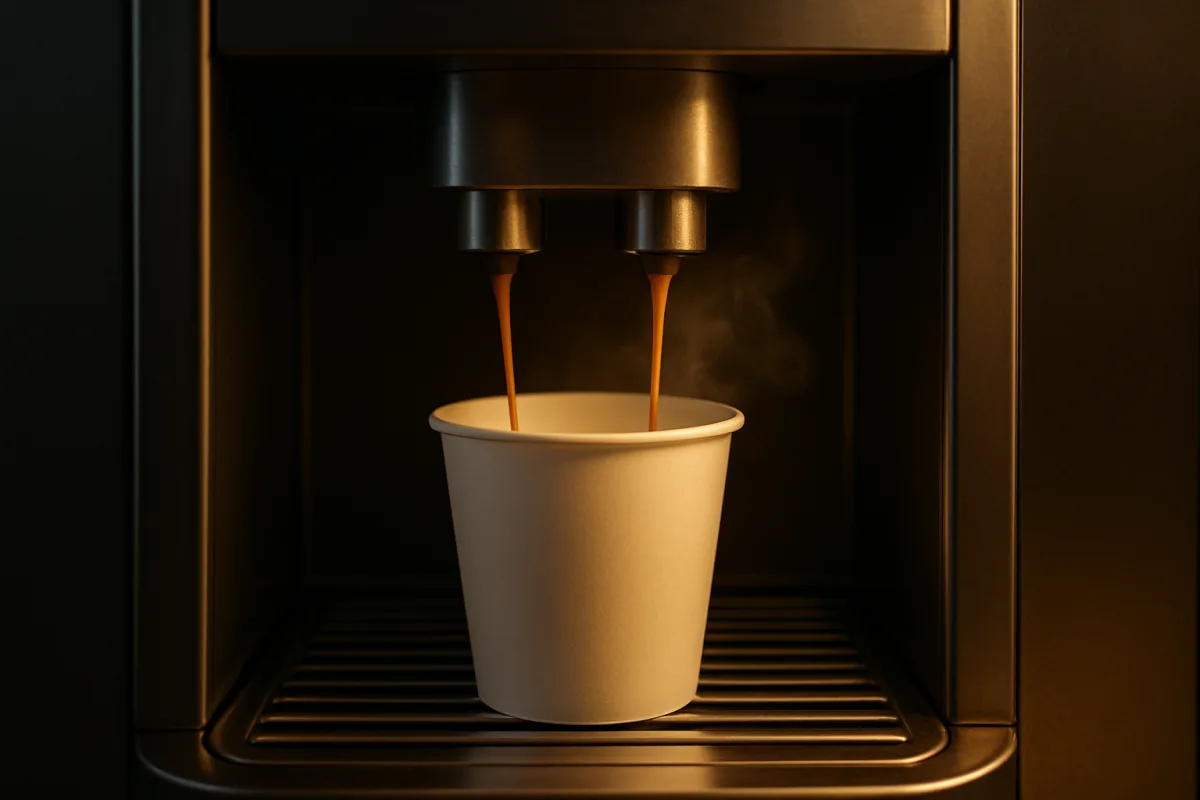
Our 6 oz vending cup is a separate item rather than a retail cup relabelled for machines: 150 ml, a 70 mm rim that matches the standard vending column, a 49 mm base and a wall stiff enough to survive the drop and the grip. If your machines run a different size, the single-wall range covers 4, 6, 7, 7.5, 8 and 9 oz — see the full hot cup category.
Case counts that decide your route cost
Route economics live in the case, not the cup. The 6 oz vending cup, the counter 6 oz, the 7 oz and the 7.5 oz all ship 3,000 pieces per case; the 9 oz ships 1,000, the 4 oz 3,000 and the 8 oz 2,000. That difference is what fills or wastes a van and a container, so we quote against your refill cycle rather than a single unit price. Tell us machines per route and refills per week and we will size the order to it.
Your brand on someone else's break
A vending cup is held for the length of a coffee and seen by everyone in the room. Flexo printing puts your operator brand, a service number or a QR code on that wall at production speed, which means printed cups cost close to plain ones at volume. Print plates are yours and stay with us for repeat runs, so the second order does not restart the setup.
One supplier, the same cup next year
Vending contracts run for years and the cup has to stay identical across them. Because production, printing, invoicing and export sit in the same business, a repeat order goes back to the same reel, the same coating and the same plates rather than to whichever trader had stock that month. Certification is on file and shareable with your own customers — see certificates — and the loading side, from case to container, is set out on the export and logistics page. If you want to see printing options before you commit, start with custom printed cups.
The cups vending machines actually run
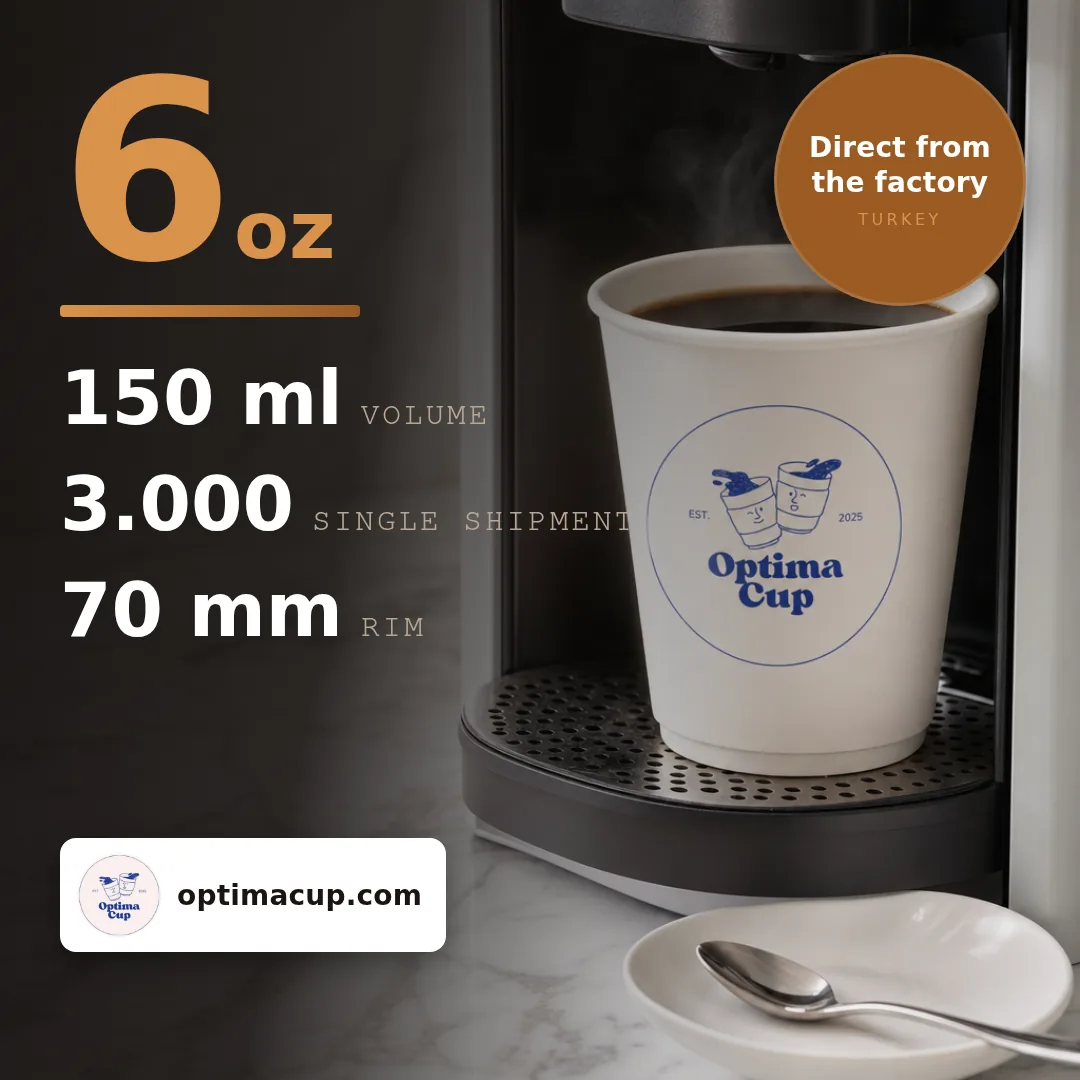
Vending paper cup 150 ml (6 oz)
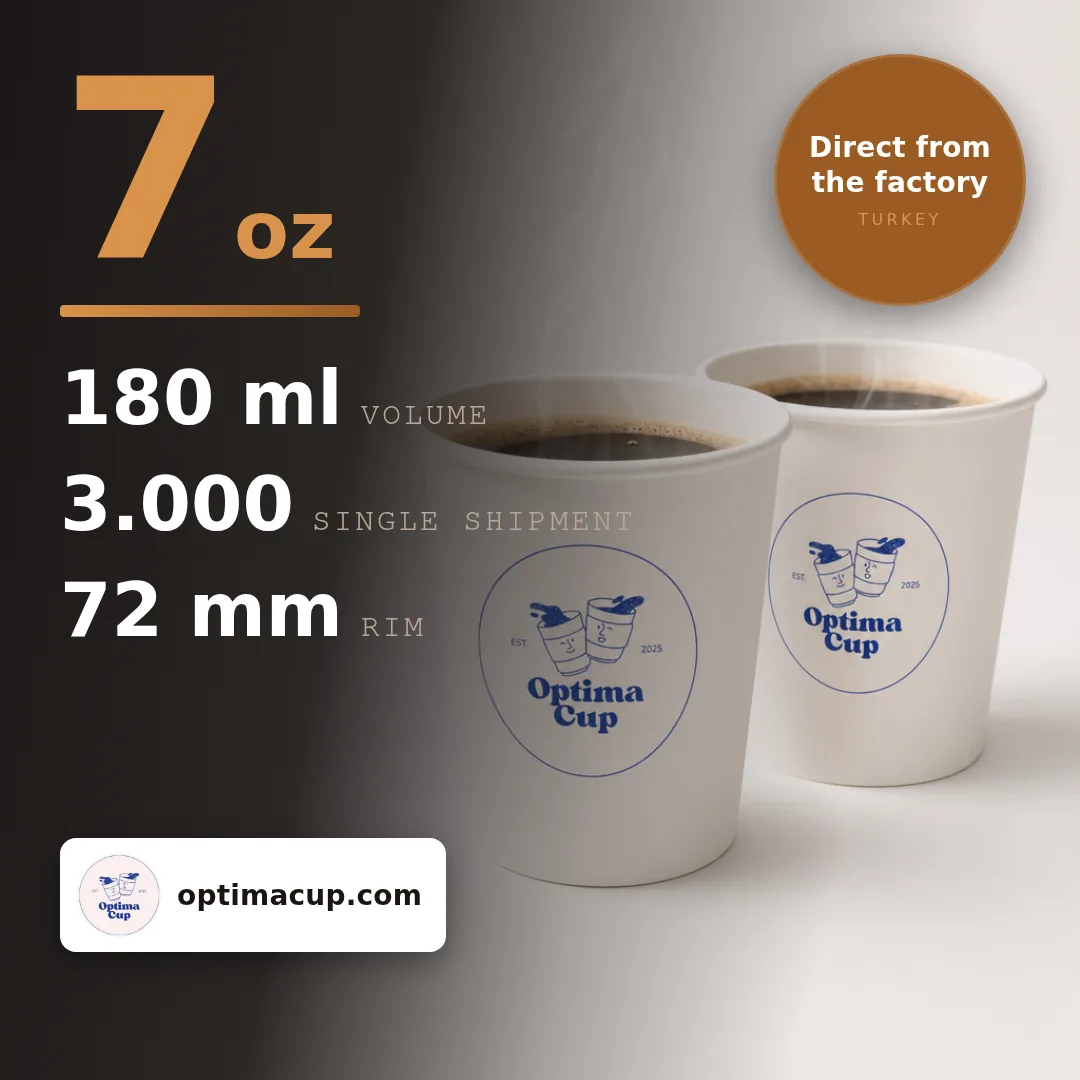
Single-wall paper cup 180 ml (7 oz)
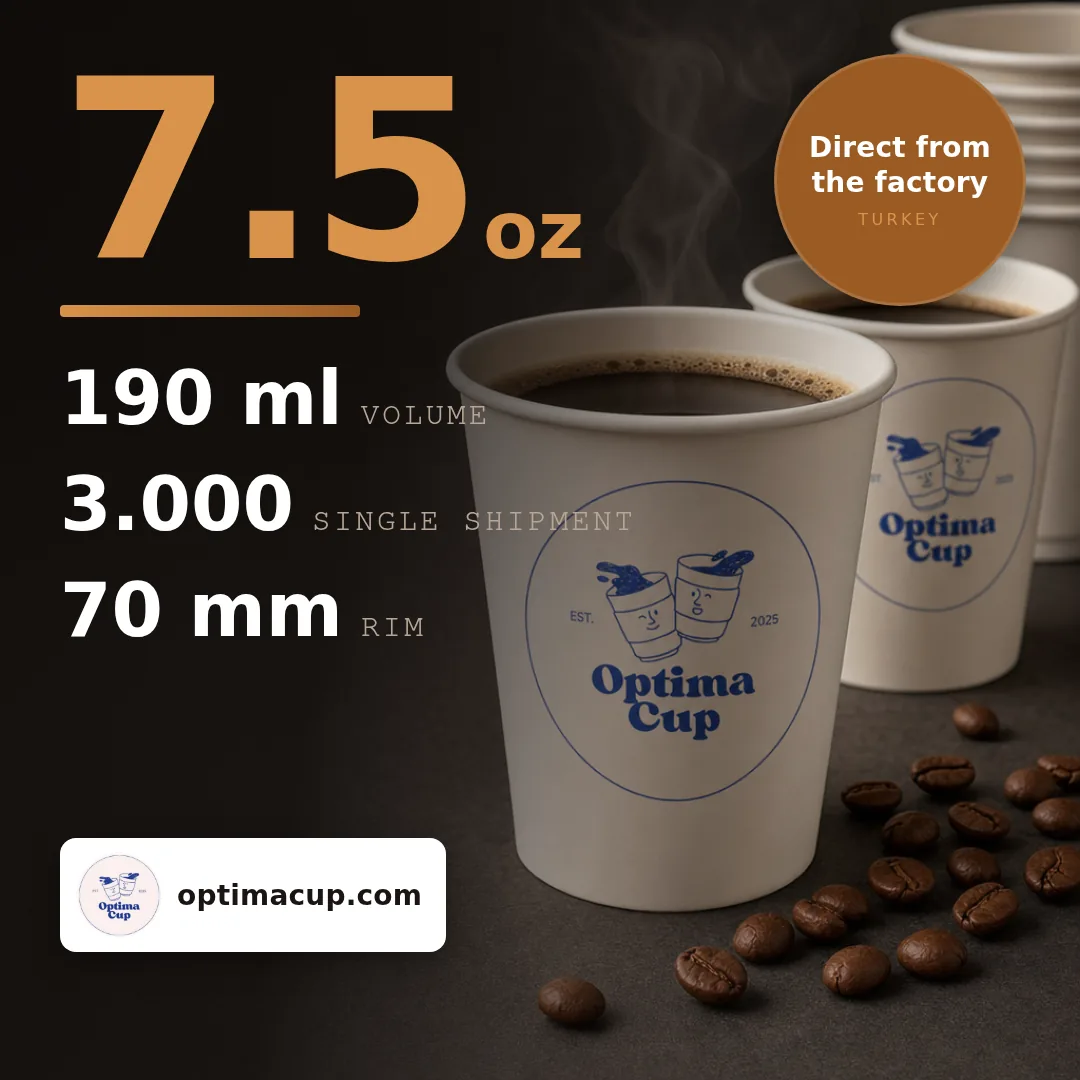
Single-wall paper cup 190 ml (7.5 oz)
All three run on the same 70 mm column setting: an operator can move between them without touching the machine. The 6 oz vending body stands 79 mm tall on a 49 mm base — the base measurement is what lets a stack separate cleanly at the dispenser. Send the column diameter your machines take and we confirm in writing which article drops cleanly before you order.
Refill maths, from sleeve to container
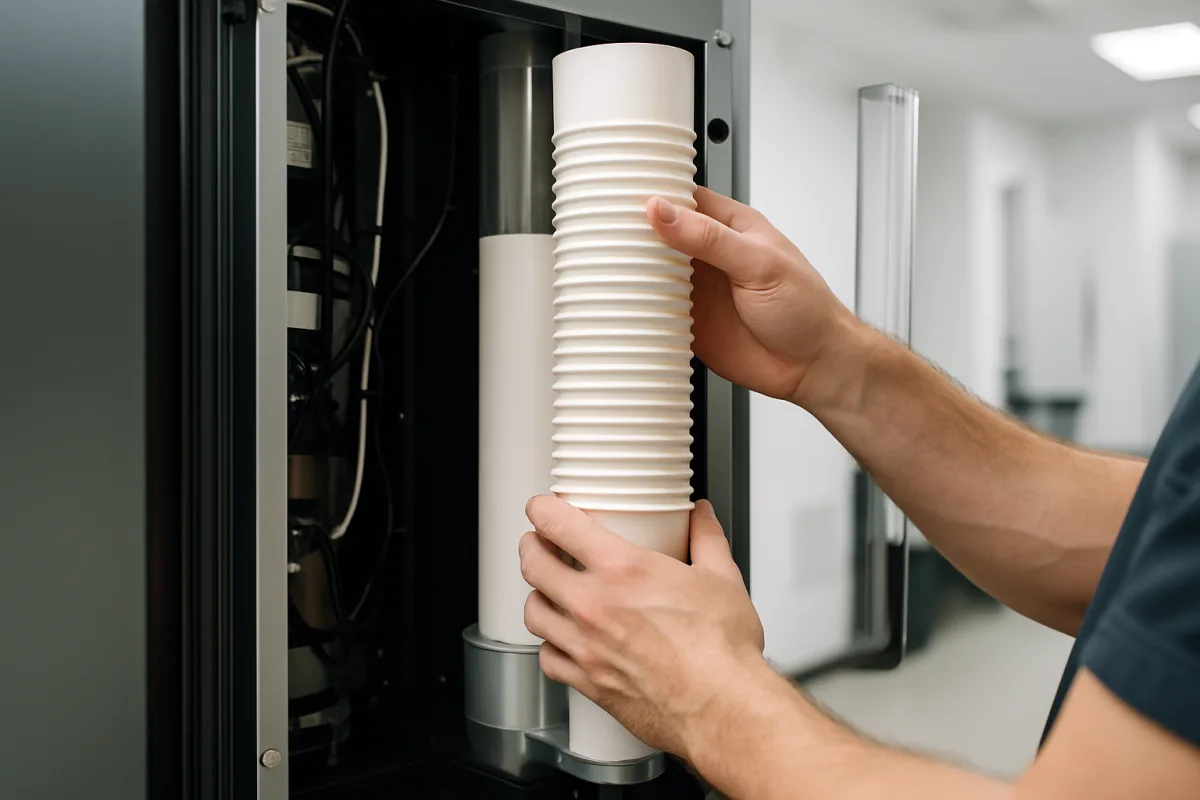
Cups arrive in sealed sleeves inside export cases of 3,000, so one case is roughly a working week for a busy bank of machines and a route van carries a full day of refills without repacking. On the shipping side, 300 cases of the 6 oz vending cup fill a 20' HQ container and 710 fill a 40' HQ — 900,000 and 2,130,000 servings respectively. The minimum order is 3 pallets, 60 cases, and several sizes can share one container as long as each size clears its own 60. That said, a partial load is possible: collect the goods from our factory with your own vehicle or a forwarder you appoint, and we can supply 1 or 2 pallets as well — the unit price rises as the pallet count drops.
For operators comparing quotes, the practical test is simple: vending cups either drop clean in your own machine or they do not — which is exactly why the sample sleeve ships first, and why wholesale paper cups are quoted by the case, not the sleeve.
Vending cups from the manufacturer: sample, print, order
Before a first order we send an unprinted sample sleeve, so your technician can test the drop in your own machine rather than trust a datasheet. Send your machine sizes, monthly volume and destination and we will come back with case counts, loading plan and lead time: request a quote.