
Material and food contact
What the goods are made of: board weight, the polyethylene barrier, single and double wall construction, PET for chilled service, and straight answers on heat, machines and recycling. Certificates are published as PDFs; the food-contact paperwork ships with your order.
A disposable cup looks like a simple object and is not one, and the difference shows up the day your container is unloaded. Material that would collapse in a glass of water has to carry a drink at serving temperature for the length of a service without losing its shape, and it manages that through a combination of stock weight, a barrier film and the geometry of the wall. This page describes what is inside the goods we supply, which food contact documents travel with them and, just as deliberately, what we decline to claim about them.
Stock weight and what it is doing
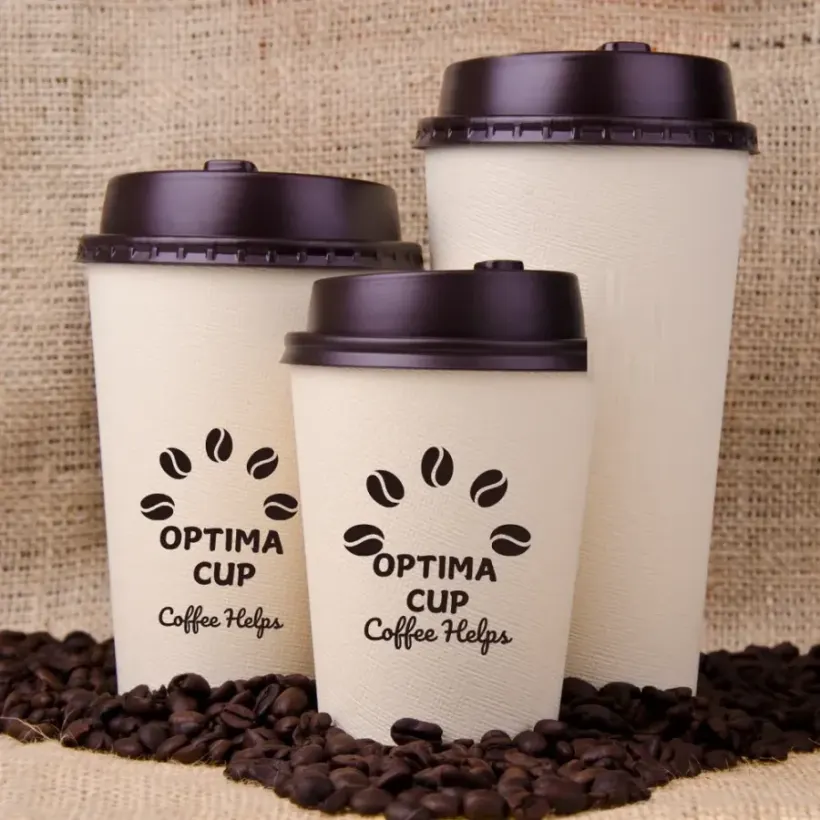
Cup board is specified in grams per square metre, the mass of a single square metre of the material, and it is the closest number there is to what a buyer means by feel. Across this catalogue the figure runs from 170 gsm on the smallest shell to 295 gsm where a wall must stay rigid with 400 ml inside it; we manufacture these cups ourselves, which is why the value is stated per article and repeated on your offer. It is set article by article rather than across a range, so the 9 oz sits on 214 gsm while its neighbours differ, and heavier material appears wherever height and volume put more load on the side of the shell — read it and you are comparing board with board, not one supplier's photograph with another's.
Heavier is not automatically better, and it is not free either: every extra gram is weight you pay for in the container. Material too stiff for a small format wastes fibre and makes a clean rolled rim harder to form, while material too light in a tall format lets the wall flex under a firm grip. Where a weight is published beside an article, that is the weight used for it, and it is the weight you can check against the goods when they arrive. Where the field is blank, the specification is confirmed on your offer instead of being estimated on a web page.
The barrier, the second wall, and where PET belongs
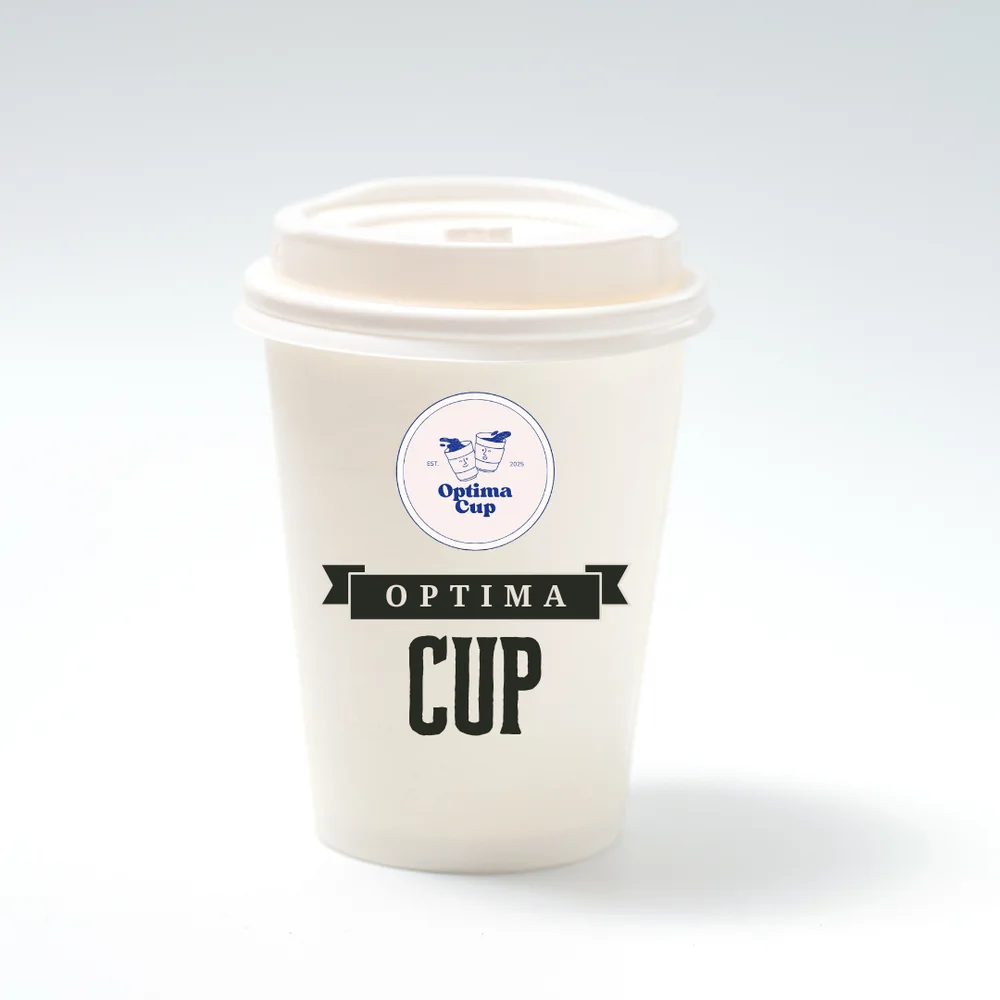
Board on its own would wet through within minutes, so the face that meets the drink carries a thin extruded film of polyethylene. That film is the whole reason a cup made of fibre works at all, and it is present on chilled articles as much as on hot ones, since a cold drink works on the wall from within while condensation runs down it from outside; on the coated cold articles its weight is published too, at 12 gsm on the inner face and 18 gsm on the outer. The outside face stays plain board, and that is the face your print goes on. Everything that meets the beverage is a food contact material intended for the purpose; the certificates we hold are published by name further down this page, and the documentation covering the stock and film used on your particular production run is sent with the quotation.
A double wall is a second layer of board wrapped around the first with still air trapped between them, and that air is what keeps the outside comfortable to hold when no separate sleeve is stocked. It costs a little space in the carton, because a double shell nests less deeply than a plain one — against that, it removes the separate sleeve from your purchase list and from your stock. Transparent PET is a different material for a different task: it stays clear and stiff when cold, which is what an iced drink or a layered dessert needs to be seen through, and nothing hot is ever poured into it.
Heat, machines and how the goods are stored
These are single-service articles, filled once at a counter and discarded, and they are not cookware. A lined shell is not a vessel for reheating: a microwave warms the contents unevenly and can push a wall past what the film and the seam were drawn for. If reheating is part of your service, say so in the enquiry and we rule out the wrong articles before you order. Nor is anything here dishwasher goods, since one wash cycle finishes an article of this kind. Where the suitability of a specific item for a machine matters to your operation, it is confirmed in writing before you buy.
Storage decides more than most buyers expect. Keep the goods in their sealed sleeves, off the floor, in a dry room away from strong odours and direct sunlight, because fibre takes up moisture from the air and printed inks can mark under heat in a store room. Treated that way a box holds its shape and its stack until it reaches the counter. Left in a damp yard it will not, whatever weight the material carries.
Recycling, and what we will not claim
A lined shell is a composite: paper fibre with a polymer film bonded to its inner face. The two can be separated, but only by a mill equipped to do it, which makes the honest answer to whether such an article is recycled depend on the collection system where it is used rather than on the article itself. Some countries operate dedicated streams and the same item is recovered; elsewhere it goes to general waste — tell us the destination market and we will say what may be claimed there before your artwork is signed off. PET is among the more widely collected polymers, and precisely the same caveat applies to it. The export boxes and sleeves your goods travel in are plain uncoated board and belong in ordinary paper collection. We would rather say that plainly than publish an environmental claim we cannot show the paperwork for: there is no compostability certificate here, because these articles are not compostable.
The food contact certificates we actually hold
What we do hold is published by name on the certificates page — ISO 22000:2018, ISO 9001, ISO 14001, ISO 45001, ISO 10002, the food business registration and the trademark registration — each a dated PDF you can open before you ever send an enquiry. Read that way, the certificates page answers the food contact question in advance rather than after an order has been placed. If your tender calls for specific material documentation, ask for it alongside your quantities and it is answered with the offer.
Material and food contact at customs: what the importer needs
For a buyer this page is not a chemistry lesson — it is a paperwork question. Goods that touch food are cleared against documents, and a consignment without them waits at the border while demurrage runs, which eats the price advantage of a whole container in a few days. So the declaration of compliance for food contact, the food business registration TR-34-K-094873 and the ISO 22000 certificate travel with the order file, not on request three weeks later.
If your market asks for a specific wording or an additional attestation, say so when you send the enquiry rather than after loading: most documents can be issued for the consignment, but only before it leaves. The certificates themselves are downloadable PDFs — check them before you order, not after. The sequence from there is fixed: your enquiry gets a written offer, the delivery term follows the type of load, FCA as standard, a proforma invoice follows your approval, and the article enters the production schedule once the transfer arrives. The minimum order is 3 pallets, that is 60 cartons; how many cups that comes to depends on the pack quantity of each size and is set out line by line in the offer. On PET items the minimum is one full truck. On the board items a partial load is also possible: collect the goods from our factory with your own vehicle or a forwarder you appoint, and we can supply 1 or 2 pallets as well — the unit price rises as the pallet count drops.
Tell us the quantity, we come back with a price
Pick the sizes you need and send them in one message — you get a quotation, not a list of questions.